Located near Market District by Giant Eagle Supermarket at the corner of Sawmill Parkway and Powell Road
Myopia Progression: Why Your Child’s Prescription Increases
Glasses help, for a while. Then the prescription changes again. Many parents see this pattern as part of growing up. In reality, frequent changes often point to myopia progression, which carries risks beyond the need for stronger lenses.
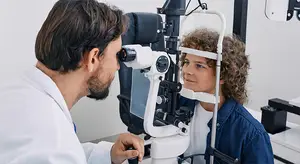
These changes often show up during routine eye exams at Powell Vision Center, sometimes before a child even mentions blurry vision.
What Is Myopia in Children?
Myopia, or nearsightedness, means close objects appear clear while distant objects blur. It develops when the eye grows longer than expected, changing how light focuses.
For many children, this change begins early and continues through school years.
Common Signs of Nearsightedness in Children
- Squinting to see far away
- Sitting closer to screens or the board
- Frequent headaches after visual tasks
- Blurry distance vision
- Frequent prescription updates
These changes can be subtle, which makes regular pediatric eye exams important.
Why Progressive Myopia Needs Intervention
A stronger prescription may seem routine, though each increase reflects physical changes in the eye.
As the eye lengthens, internal structures stretch. Over time, this raises the risk of more serious conditions.
High Myopia Risks
- Retinal detachment
- Glaucoma
- Myopic macular degeneration
- Early cataracts
- Vision loss
Why Standard Glasses Aren’t Enough
Glasses sharpen vision, though they do not slow the eye's growth.
They correct focus in the moment, yet myopia progression continues in the background. This often leads to changes in prescriptions each year.
When to Consider Myopia Management
A first pair of glasses often marks the beginning of a pattern. The key lies in knowing when to step in:
- Prescription changes within a year
- Family history of myopia
- Early onset in childhood
- High levels of screen time
Early care with our eye doctors can slow progression and reduce future risks.
Where to Find Trusted Pediatric Eye Care
Instead of waiting for vision to worsen, myopia management focuses on slowing progression and protecting long-term eye health.
At Powell Vision Center, our eye care blends advanced tools with a personal approach, giving families clear guidance at every step.
If your child’s prescription continues to change, it may be time to book an eye exam.
Common Questions Parents Ask
Can myopia be reversed?
Myopia cannot be reversed, though treatment can slow progression.
Are contact lenses safe for children?
Many children wear contact lenses safely with proper care and guidance.
How quickly can myopia progress?
Progression varies, though many children experience changes year to year.